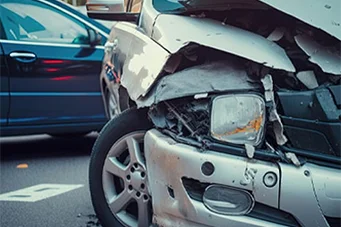
If your car accident damages exceed what your insurance covers, you’re facing the tough situation of your vehicle damage being more than your insurance limit. This can be stressful and leave you unsure about how to handle the potential financial impact. For instance, you’re involved in a multi-car pile-up on the interstate. Your car is totaled, and there are multiple injuries, including your own. The bills for medical care, car replacement, and potential legal action from other parties involved quickly accumulate to a sum that dwarfs your insurance policy’s limit.
In such a scenario, you might feel like you’re up against a wall. Medical expenses can be astronomical, and the cost of replacing your vehicle can be another financial challenge. The stress of the situation might be compounded if you find yourself unable to work due to your injuries, cutting off your primary source of income when you need it most.
This is where Chris Morrow Law, PLLC steps in, offering a beacon of hope. Our experienced legal team understands the emotional and financial turmoil that comes with such accidents. We can guide you through the maze of legal options available to you, potentially identifying other liable parties that may have contributed to the accident, such as a distracted driver or a company responsible for a vehicle malfunction. We could help you pursue compensation from these parties, which can be critical when your own insurance falls short.
If you’re facing the overwhelming challenge of accident-related expenses exceeding your insurance coverage in Austin, Texas, take control of your situation and reach out to Chris Morrow Law, PLLC for steadfast legal support. Our seasoned team is ready to advocate for your rights and pursue the compensation you rightfully deserve. Don’t wait until it’s too late; call us now at 512-520-8100 for a free consultation. Together, we can strive for the justice and financial recovery you need to move forward.
Understanding Your Insurance Policy’s Limits
Insurance policy limits are the maximum amount an insurance company will pay for a covered claim. These limits exist because insurance companies are for-profit entities. They help ensure that the insurer can remain solvent by capping their potential payout for any one claim, especially when a claim exceeds insurance limits.
Bodily injury liability insurance and property damage liability are core components of auto liability coverage, each with its own designated limit. Knowing your auto insurance policy limits is crucial to avoid being financially vulnerable after an accident. It’s often advised to carry liability coverage at least equal to your net worth to protect your assets in case of lawsuits resulting from accidents.
Opting for higher insurance coverage limits can result in more comprehensive protection but typically leads to higher premium costs.
Deciphering Policy Details
A car insurance policy typically includes liability coverage, collision coverage, and comprehensive coverage, each with its own set limits. Bodily injury liability coverage has limits that are expressed per individual and per accident, setting a specific cap on payouts for each.
Property damage liability coverage, on the other hand, limits the amount that can be paid out for damages incurred to another person’s property in an at-fault accident. Collision insurance, designated for vehicle repairs stemming from driving-related incidents, does not include damages due to non-driving events such as weather or theft, nor does it cover medical costs. These details are crucial when evaluating your coverage needs.
Evaluating Your Coverage Needs
Evaluating your coverage needs involves considering your net worth, driving habits, and state minimum requirements. Financial experts generally recommend carrying liability insurance limits of at least 100/300/100. If you have high-value assets or if you’re a business owner or professional, you may require higher coverage limits due to the greater risk of being sued.
Determining the right liability limit should consider an individual’s net worth, driving habits, and involve a conversation with your insurance carrier for advice tailored to your specific situation. It’s also essential to reassess and possibly increase your insurance coverage limits after life changes such as buying property or having a significant income change. State minimum insurance often falls short of covering the costs of a serious accident, with non-disabling injuries potentially exceeding $40,000.
To protect against financial burdens, such as being liable for costs that exceed insurance limits, having adequate insurance coverage is crucial.
When the Cost of a Car Accident Exceeds Your Insurance Coverage
When an accident claim exceeds insurance policy coverage, you may find yourself responsible for paying the difference out-of-pocket. In such cases, a settlement agreement can be reached where the insurer pays out based on the policy maximum, and the at-fault driver compensates the rest with personal assets.
However, before accepting a settlement offer, it’s crucial to review it with a lawyer such as Chris Morrow Law, PLLC to understand the implications of releasing all liable parties from further financial responsibility. Compensation can be sought directly from the defendant or their umbrella policy if the medical expenses exceed their auto policy limit. In many states, you can file a claim based on your underinsured motorist coverage to protect your assets after an accident where damages exceed insurance limits.
The Role of Health Insurance in Covering Excess Medical Bills
Health insurance can step in to pay for medical bills related to a car accident if they exceed the at-fault driver’s auto policy limits. In some states, MedPay insurance can provide additional coverage for medical expenses not fully covered by auto insurance. MedPay, or Medical Payments coverage, is an optional auto insurance provision that pays for the medical and funeral expenses of the driver and passengers after an accident, regardless of who is at fault.
If the at-fault driver’s insurance has settled for the policy maximum, you can file a claim under your own uninsured/underinsured motorist policy to recover additional damages. This can help cover any remaining costs related to the accident. This can be a financial lifesaver, especially in cases of significant injuries.
Collision Coverage and Car Repairs
Collision coverage helps pay to repair or replace your car if it’s damaged in a collision with another vehicle or object, like a tree or fence. The limit of collision coverage is typically the actual cash value of the vehicle, which considers depreciation and a deductible ranging from $250 to $1,000 must be paid out-of-pocket before the coverage applies. When the cost of car repairs exceeds the liable party’s property damage limits, your collision coverage can step in to cover repair costs after the deductible, up to the policy’s limits.
Protecting Your Financial Interests After an Accident
After an accident, protecting your financial interests becomes a top priority. One of the primary steps involves reviewing your insurance policy and keeping track of all expenses incurred to understand your financial exposure.
Another strategy is to negotiate with medical providers to potentially settle care costs for a lesser amount than originally charged. But what if your coverage still falls short? This is where umbrella policies come in.
Umbrella Policies and Additional Coverage
An umbrella policy provides an extra layer of liability insurance that provides additional coverage beyond standard policy limits, often in $1 million increments. These policies extend coverage to non-standard situations, such as:
- Accidents on your property
- Dependents causing damage
- Pet-related incidents
- Situations exceeding auto insurance limits
In addition to extensive coverage, umbrella policies offer protection against personal liability, including responsibility for payment that exceeds basic insurance limits and legal claims for defamation. This extra protection is invaluable when dealing with high-cost accidents.
Financial Planning Post-Accident
Financial planning post-accident is a crucial step towards recovery. Setting up a payment plan for medical bills and using accounts like Flexible Spending Accounts (FSA) or Health Savings Accounts (HSA) can help manage the financial load after a high-cost car accident.
Keeping detailed records of injuries and financial losses facilitates negotiations with insurance companies, ensuring claims are substantiated and more likely to be approved. While managing finances post-accident can be daunting, there are legal options available to help recover additional compensation.
Legal Options to Recover Additional Compensation
Legal options to recover additional compensation are often necessary when a car accident claim exceeds insurance limits. Individuals can file lawsuits to recover the full amount of damages, even if those damages exceed the policy limits.
After a trial, if the jury awards more than the insurance coverage, the defendant might have to compensate for the difference through a lien or seizure of assets. But, is there a way to extend the potential financial compensation?
Identifying Other Liable Parties
Identifying other liable parties can help extend financial compensation beyond a single policy’s limit. For instance, if a driver was on the job at the time of the accident, their employer might also bear liability under the principle of ‘respondeat superior’.
Car accidents caused or exacerbated by defective products can lead to product liability claims against the manufacturer or distributor. In such cases, a car accident claim can also be pursued against government entities if damages result from accidents caused by road defects for which the entity was responsible.
Such strategies can significantly extend the financial compensation beyond a single policy’s limit.
The Importance of Acting Within the Statute of Limitations
The statute of limitations for personal injury cases in Texas is two years from the date of injury. Failing to file a personal injury claim within two years can bar an individual from seeking compensation.
Seeking guidance from a legal professional early on is crucial to adhering to the two-year statute of limitations. This is where Chris Morrow Law, PLLC can step in to help.
How We Can Help: Chris Morrow Law, PLLC’s Approach to Exceeding Limits
At Chris Morrow Law, PLLC, our car accident attorney leverages 25 years of experience in personal injury claims to provide reliable representation to those affected by accidents. We are well-prepared to handle tough negotiations with insurance companies and are not averse to bringing cases to court when needed.
Our approach ensures that we empathize with our clients’ situations and maintain a level of emotional connection through the challenges of legal proceedings.
Our Strategy for Settlement Negotiations
Our negotiation strategy involves:
- A comprehensive calculation of the client’s economic and non-economic damages to form the basis of the settlement talks with the insurance company
- Drafting a demand letter, detailing the client’s damages and the compensation required
- Supporting the demand letter with appropriate documentation like medical bills.
In negotiations, we maintain a thought-out settlement range, keeping the minimum and maximum amounts undisclosed to the insurance company to ensure a favorable outcome. Persistence, patience, and the readiness to take the case to trial are key to our negotiation process, influencing the settlement offers made by insurance adjusters.
Preparing for Trial
We are prepared to take cases to trial if necessary, with the awareness that a very small percentage of cases, only about 4-5%, actually go to a personal injury lawsuit trial. Our seasoned attorneys are ready to fight for clients’ compensation in court, if insurance companies do not offer a fair out-of-court settlement.
When preparing for trial, we meticulously gather and organize evidence to establish the defendant’s liability and present a detailed calculation of the plaintiff’s losses. We thoroughly prepare to counter defense tactics, ensuring that damage evaluations are independent and comprehensive to achieve fair compensation for clients.
Chris Morrow Law, PLLC – The Lawyer That Works
At Chris Morrow Law, PLLC, we want legal representation to be available to all, no matter what their situation. Our passion is seeking the fair and reasonable treatment, compensation, and justice you deserve. We will work tirelessly around the clock to ensure you have the highest chance of success.
Our attorneys have a long history of successful cases, and our long list of happy clients speaks for itself. We are as skilled in the courtroom as we are outside of it, so you can rest easy knowing that we are the right team for the job, whether that is seeking a quick and fair settlement or going the distance in court.
Our team of highly experienced Austin car accident lawyers has been fighting compassionately on behalf of our clients since 1994, giving us over 25 years of experience. Give us a call today at 512-520-8100.
Frequently Asked Questions
Who pays the damages that exceed the policy limits?
The individual whose damages exceed their policy limit is personally responsible for covering the remaining amount. This means they would have to pay for any excess damages out of their own pocket.
What is the statute of limitations for personal injury cases in Texas?
In Texas, the statute of limitations for personal injury cases is two years from the date of injury. It’s important to take legal action within this timeframe to protect your rights.
Can my own insurance company refuse to pay if my damages exceed the policy limits?
No, your insurance company is obligated to pay up to the policy limits as outlined in your insurance contract. However, they are not required to pay beyond those limits. It’s important to understand your policy details to know what coverage you have.
If I’m not at fault, why would I have to pay anything?
In cases where the at-fault party’s insurance is insufficient to cover all damages, and you have no underinsured motorist coverage or other applicable coverage, you may be responsible for the remaining costs. It’s essential to have adequate insurance to protect yourself from such situations.
What happens if the at-fault party has no insurance at all?
If the at-fault party has no insurance, you may file a claim under your own uninsured motorist coverage if you have it. Otherwise, you may need to sue the at-fault party directly, but collecting compensation can be challenging if they lack the financial resources.