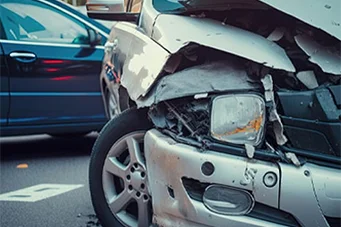
It’s a common belief that in a rear-end collision, the driver following behind is always at fault. However, in the bustling streets of Austin, this notion does not hold true in every case. Each rear-end collision carries its own set of circumstances, which can shift the blame away from the driver in the rear. In some situations, the leading driver may make an unpredictable move, fail to maintain their vehicle properly, or engage in distracted driving, all of which can contribute to the occurrence of a rear-end collision. It’s essential to consider the full context of the accident, including the behavior of both drivers and the conditions on the road, to determine fault accurately. The assumption that the rear driver is always at fault is a misconception that oversimplifies the complexities of real-world driving scenarios and legal responsibility.
If you’ve found yourself rear-ended in a car accident and are unsure about the fault, it’s time to reach out for professional advice. Call Chris Morrow Law, PLLC, at 512-520-8100 for a free evaluation of your incident. Our dedicated team will help you understand your rights and work diligently to ensure that you are treated fairly, without the stress of facing the legal aftermath alone. With comprehensive legal services, we can assist you in understanding traffic law intricacies, represent you in court if necessary, and advocate for the compensation you deserve.
Navigating Fault in Austin Rear-End Collisions
In Austin, Texas, rear-end collision fault is based on a careful evaluation of each incident, rather than automatically blaming the ‘rear’ or ‘lead’ driver. Recognizing the unique elements of each crash is key to establishing fault, as there is no one-size-fits-all rule in the law for rear-end accidents.
The Myth of Automatic Fault
The belief that the rear driver in a rear-end collision is always fully responsible is widespread, yet legally unfounded. This is a critical distinction because it acknowledges that rear-end collisions happen under a variety of circumstances, some of which may not be within the control of the trailing driver. This understanding is crucial when proving fault or establishing fault for a rear-end collision.
If you’re involved in a rear-end collision, it’s comforting to know that you’re not automatically blamed by the law. It means that your case will be evaluated based on the specifics, including whether the lead vehicle made a sudden stop without a valid reason, or if there was any other contributing factor that could shift the blame, even partially, away from you.
Factors That Affect Fault Assessment
In determining the fault for a rear-end collision, several steps and missteps can sway the outcome. A vehicle’s screeching halt due to faulty brakes, unintended acceleration because of a stuck pedal, or a tire blowout can dramatically alter the narrative of fault in a rear-end crash. Similarly, the role of external conditions cannot be understated. Adverse weather, road defects, or unexpected obstacles can contribute to rear-end accidents, influencing how fault is assessed.
Driver behavior also plays a significant role in proving fault. For instance, if the leading driver does not maintain a safe distance, engages in unsafe merges, or is inattentive to road conditions, they could be implicated in the fault assessment of a rear-end collision. It’s about piecing together a comprehensive picture that takes into account all actions leading to the collision, rather than jumping to conclusions based on the positions of the vehicles and the drivers involved.
Understanding Comparative Negligence in Texas
In Texas, the concept of modified comparative negligence, known as the 51% Rule, applies. This rule allows for fault to be divided among parties in an accident, reflecting a more nuanced approach to responsibility and compensation.
This shared fault system means that if you’re involved in a rear-end accident, the compensation you’re eligible for could be reduced in proportion to your degree of fault. Moreover, crossing the threshold of being found negligent for 51% or more of the accident restricts you from recovering damages altogether, ensuring that those who are more responsible for an accident don’t benefit from their negligence. It’s a rule that underscores the importance of a detailed and fair assessment of every car accident, including rear-end collisions.
When the Leading Driver May Share Fault
While the trailing driver is often scrutinized in rear-end collisions, the lead driver can be at fault too. Abrupt lane changes without signaling, unnecessary sudden stops, or malfunctioning brake lights can contribute to an accident. Illegally parked vehicles, unexpected reversals, or cutting off traffic are also potential indicators of the lead driver’s fault. A detailed review of the lead driver’s conduct is crucial, as it’s not just about the collision, but who failed to uphold safe driving practices.
The Role of Evidence in Establishing Fault
In a rear-end collision, gathering evidence is essential such as:
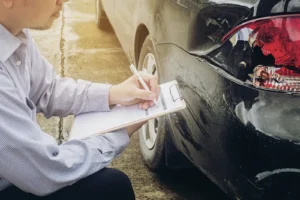
- Photographs of the vehicles’ positions post-collision and any visible damage.
- Videos that may capture the collision’s immediate aftermath or of the road conditions.
- Witness statements and contact information from individuals who observed the incident.
- Detailed notes on environmental conditions, such as weather, road quality, and traffic signals.
- Any relevant dashcam footage from your vehicle or nearby cars that recorded the incident.
Expert witnesses, such as accident reconstruction specialists, can provide the expertise needed to interpret complex evidence, whether it’s analyzing tire skid marks or delving into vehicle computer data. And if you’re unable to collect evidence immediately due to injuries or other circumstances, remember that it’s paramount to return to the scene later or have someone else do it for you. This ensures key evidence is preserved and that you have the strongest possible foundation for your case.
Recovering Damages After a Rear-End Crash
After experiencing the shock of a rear-end collision, the path to recovery often includes the pursuit of damages to compensate for injuries and losses. These recovered damages could include:
- Medical expenses, including emergency treatment, hospitalization, and ongoing care
- Lost wages due to time off work for recovery and medical appointments
- Property damage, such as vehicle repair or replacement costs
- Pain and suffering, including physical discomfort and emotional distress
Severe injuries not only lead to personal hardship but also significantly affect compensation in personal injury cases. In Texas, a two-year statute of limitations is critical for filing a car accident claim, emphasizing the urgency to act swiftly.
Exceptions to this statute exist, for instance, if the victim is a minor or if the defendant has left the state, but generally, the window of opportunity is firmly set. Missing this deadline due to inaction or unawareness can result in losing the right to compensation, no matter how compelling your case or how severe your injuries are. It’s a stark reminder of the importance of acting promptly and decisively, something we at Chris Morrow Law, PLLC, emphasize and are prepared to handle efficiently within the timeframe.
Our Approach to Your Rear-End Collision Case
Dealing with the consequences of a rear-end car accident involves not only legal experience but also a compassionate approach that recognizes the distinct challenges faced by each client. At Chris Morrow Law, PLLC, we pride ourselves on delivering both. Our approach is grounded in personalized legal representation, ensuring that every client feels fully supported and understood throughout their case. We draw from a wealth of resources to keep our clients well-informed and prepared, no matter how the legal process unfolds.
Our commitment extends beyond the negotiation table to the courtroom if necessary. We stand ready to go to trial, demonstrating our unwavering dedication to securing the rights and fair compensation our clients deserve. It’s this readiness, combined with our personal touch, that distinguishes our firm and reaffirms our pledge to stand by our clients every step of the way.
Investigative Strategies We Employ
In the wake of a rear-end accident, a thorough investigation is vital to peel back the layers of the incident and reveal the truth. Our legal team is adept at gathering and presenting evidence that dissects the circumstances of the collision, scrutinizing whether the actions of the lead driver contributed to the event. When the complexities of a case demand it, we don’t hesitate to enlist to clarify the cause and identify all parties at fault:
- Forensic Experts: Provide critical analysis of evidence such as skid marks and vehicle damage to establish the dynamics of the collision.
- Accident Reconstruction Specialists: Recreate the accident using scientific methods to determine the sequence of events leading up to the impact.
- Medical Professionals: Assess the extent of injuries sustained and link them causally to the collision, which is essential for personal injury claims.
- Engineers: Analyze the structural integrity of vehicles and road conditions to identify contributing factors to the crash.
Our investigative lens also captures the potential culpability of third-party motorists, including those whose aggressive driving may have triggered a chain of events culminating in a rear-end collision. It’s a comprehensive approach that leaves no stone unturned, ensuring every contributing factor is considered and every responsible party is held accountable.
Communicating with Insurance Companies
Dealing with insurance adjusters post-accident is a nuanced dance, one that requires finesse and strategic communication. Our firm’s founder, Chris Morrow, brings years of experience to the table, skillfully negotiating with insurance companies to convey the full extent of our client’s injuries and damages. We advise our clients to be cautious in their interactions with the other driver’s insurance, ensuring they don’t inadvertently harm their claim by discussing injuries or admitting fault without legal representation.
Our advocacy shields clients from the pressure to accept undervalued settlements. We engage proactively with insurance adjusters, challenging any attempts to minimize compensation and fighting tirelessly for what’s fair. We understand that insurance companies may not have our clients’ best interests at heart, which is why we take the lead in these conversations, determined to recover the full compensation our clients are owed.
Why Trusting Us Makes a Difference
In the aftermath of a rear-end collision, the car accident lawyer you choose can make a significant impact on the outcome of your case. By trusting Chris Morrow Law, PLLC, you’re not just hiring an attorney; you’re gaining an ally with a proven track record of increasing settlement amounts for our clients. We place your concerns at the forefront, offering round-the-clock availability to address any questions or anxieties that arise, recognizing the profound impact a collision can have on your life and future.
Our clients’ testimonials speak to our helpfulness, responsiveness, and our exceptional ability to secure satisfactory settlements or provide exemplary trial representation when needed. It’s the combination of our experience, personal commitment, and relentless pursuit of justice that makes entrusting your case to us a decision that can bring peace of mind and the potential for a better result.
Chris Morrow Law, PLLC – The Lawyer That Works
At Chris Morrow Law, PLLC, we want legal representation to be available to all, no matter what their situation. Our passion is seeking the fair and reasonable treatment, compensation, and justice you deserve. We will work tirelessly around the clock to ensure you have the highest chance of success.
Our attorneys have a long history of successful cases, and our long list of happy clients speaks for itself. We are as skilled in the courtroom as we are outside of it, so you can rest easy knowing that we are the right team for the job, whether that is seeking a quick and fair settlement or going the distance in court.
Our team of highly experienced Austin car accident lawyers has been fighting compassionately on behalf of our clients since 1994, giving us over 25 years of experience. Give us a call today at 512-520-8100.
Frequently Asked Questions
Can the driver in the front be at fault in a rear-end collision?
Certainly, the leading driver can be at fault in a rear-end collision. Instances of negligence such as abrupt stopping without a clear reason, failing to use turn signals, or engaging in illegal lane changes can all lead to the lead driver being responsible for the accident. It is important to assess the leading driver’s actions before the collision to determine if they contributed to the cause of the crash.
How is fault determined in a rear-end collision in Austin?
Fault in a rear-end collision in Austin is determined by a careful analysis of each driver’s behavior leading up to the accident. This process includes examining whether the trailing driver maintained a safe following distance and speed, as well as whether the leading driver acted responsibly. External factors, such as road conditions, traffic signals, and weather, are also taken into consideration during the investigation.
What should I do immediately after being involved in a rear-end collision?
If you find yourself in a rear-end collision, the first step is to ensure that all parties involved are safe. Then, call the authorities and seek medical attention if necessary. It is crucial to collect evidence at the scene, such as taking photographs, gathering witness statements, and noting down environmental conditions, which can all be valuable during the fault determination process. It’s advisable to avoid discussions about fault at the scene and to seek legal counsel promptly to protect your rights.
How does comparative negligence work in Texas car accident cases?
Comparative negligence in Texas car accident cases operates under a modified system that apportions fault and damages between the parties involved. If a driver is found to be 51% or more at fault, they are barred from recovering any damages. For those found less at fault, their compensation is reduced in proportion to their degree of fault, encouraging a fair distribution of responsibility and recovery.
If a rear-end collision was caused by weather, who is at fault, and who pays?
Adverse weather conditions can be a significant factor in rear-end collisions. Determining fault in such scenarios involves assessing whether the trailing driver was maintaining a safe distance and speed considering the weather conditions. If the other driver fails to adjust their driving behavior to accommodate for reduced visibility, slippery roads, or other weather-related challenges, they may still be found at fault.
On the other hand, if the leading driver’s actions were unsafe for the conditions (e.g., sudden stops, improper lane changes), they could share in the fault. In Austin, the modified comparative negligence rule applies, meaning each driver’s compensation could be reduced by their percentage of fault, as long as it’s under 51%.
As for who pays, typically, each driver’s insurance will cover their own damages unless one driver is deemed fully responsible. However, weather-related accidents often result in a shared fault, and thus, shared financial responsibility. It’s crucial to have a thorough investigation to establish fault accurately, and an experienced attorney can be invaluable in navigating these complex claims.